From Identity to Interconnection: Cultural Memory and Relationality in the Whitney Biennial 2026
The 2026 Whitney Biennial moves beyond identity politics toward a richer exploration of how cultures, histories, environments, and communities coexist — a survey that asks not who deserves visibility, but how we might live together.
By Lanney Jing · August 1, 2026 · 6 min read
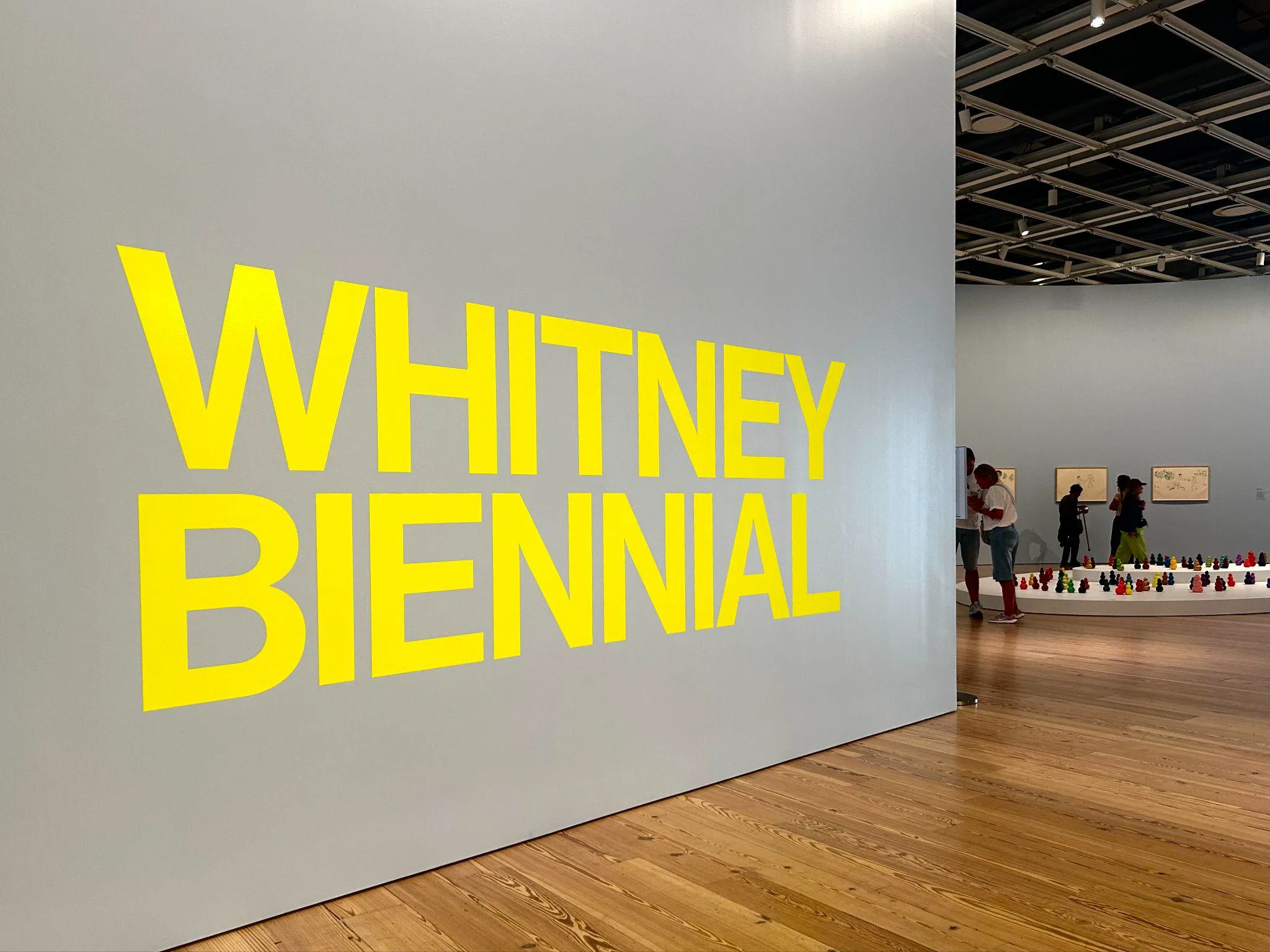
The Whitney Biennial has long served as one of the most influential surveys of contemporary American art. More than simply presenting current artistic trends, it often reflects broader social, political, and cultural shifts while also suggesting possible directions for the future of art. The 2026 Whitney Biennial continues the museum's commitment to diversity and representation, bringing together artists from a wide range of ethnic, cultural, and national backgrounds. However, unlike earlier exhibitions that often focused on identity politics and representation, this Biennial emphasizes relationships: between cultures, histories, environments, technologies, and communities. Through its diverse artworks and experimental curatorial approach, the exhibition explores not only who we are, but also how we coexist in an increasingly interconnected world.
One of the most striking aspects of the exhibition is the prominence of artists from diverse backgrounds, including Asian, Black, Latino, and Indigenous communities. Yet the exhibition does not simply celebrate diversity for its own sake. Rather than treating identity as a fixed category, many artists use their cultural heritage as a foundation for exploring broader questions of memory, belonging, and interconnectedness.
A notable example is Japanese artist Akira Ikezoe, whose intricate oil paintings depict imaginary yet internally logical ecosystems. Filled with interconnected organisms, structures, and cycles, his works resemble diagrams of alternative worlds. Although these environments are fictional, they suggest a deep relationship between humans and nature. Ikezoe's paintings encourage viewers to see the world not as a collection of isolated entities but as a network of interconnected systems. His work reflects one of the Biennial's broader concerns: moving beyond identity alone to consider relationships and coexistence.
![kekahi wahi and Bradley Capeello, 20-minute workout [WIP], 2023/2026, Digital video, sound, and color, 25 min.](/api/storage/public-objects/heroes/culture-whitney-biennial-kekahi-wahi-2026.jpg)
This shift from identity politics toward what might be called relational politics is one of the exhibition's most significant achievements. Rather than focusing primarily on who is represented, many works ask how cultures, histories, and communities interact with one another. Identity remains important, but it is presented as part of larger social and ecological networks. The exhibition ultimately suggests that understanding contemporary society requires attention not only to difference, but also to connection.
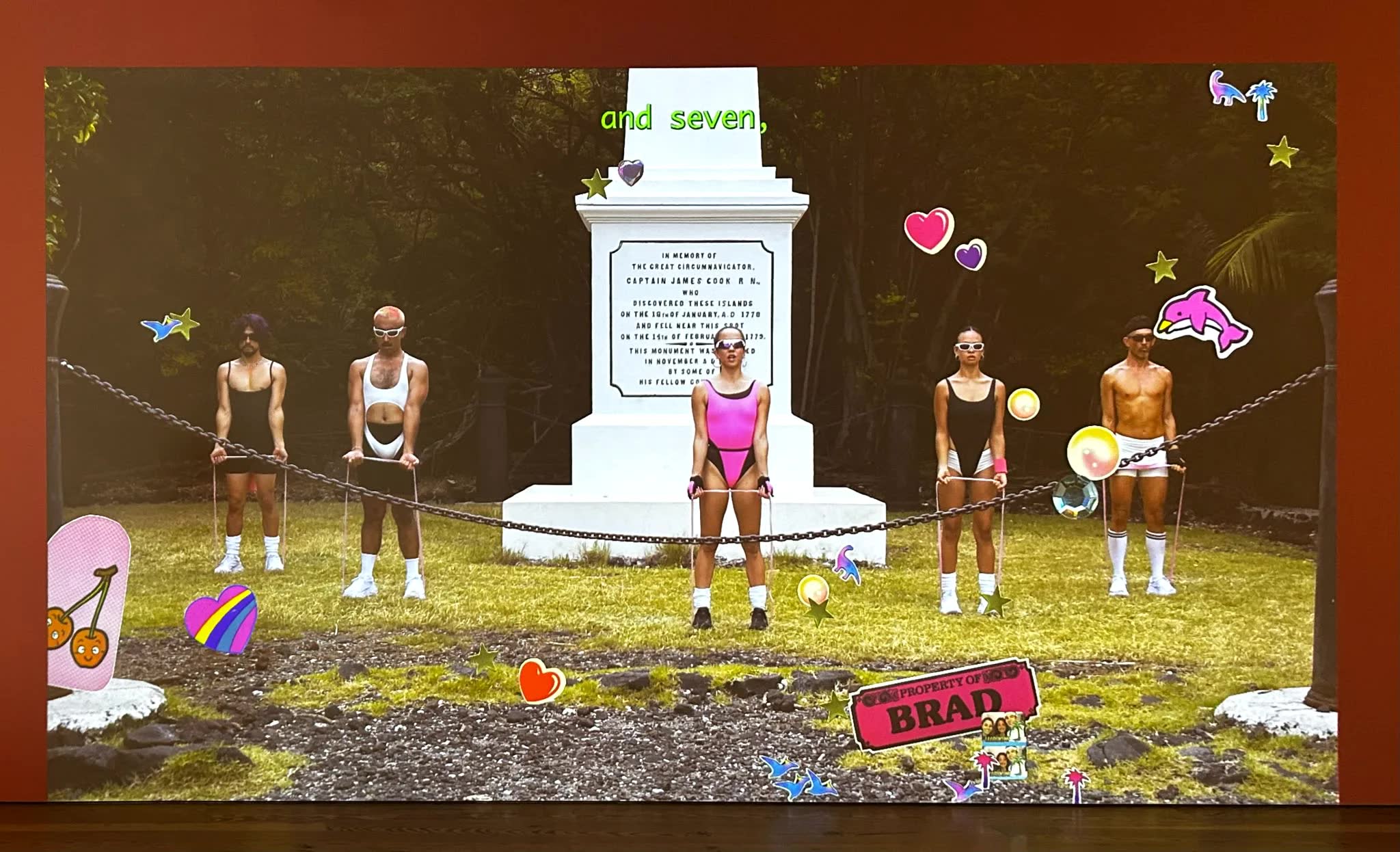
Questions of land, history, and colonialism are especially visible throughout the exhibition. Several works revisit Indigenous histories and pre-colonial cultural traditions, reflecting a growing interest in decolonial perspectives within contemporary art. Among the most memorable works is the video installation by kekahi wahi, which adopts a colorful pop-art visual language to depict people exercising around monuments and locations in Hawaii. While the scenes initially appear humorous, the work reveals a deeper critique. These sites once held significant meaning for Native Hawaiian communities, yet they now function largely as tourist attractions or public recreational spaces.
By showing contemporary fitness culture occurring in locations with complex historical and cultural significance, the work highlights the disconnect between modern life and the histories embedded within the landscape. The juxtaposition is both ironic and unsettling. Rather than directly condemning colonialism, the piece encourages viewers to recognize how historical memory can be obscured by everyday activities. In doing so, it prompts reflection on the relationship between people, land, and cultural heritage.
The exhibition's exploration of nature extends beyond questions of colonial history. Many artists present nature not as a passive backdrop but as an active participant in human experience. Landscapes become sites of memory, conflict, and coexistence. This ecological perspective further reinforces the exhibition's emphasis on interconnectedness, suggesting that humans are inseparable from the environmental systems in which they live.
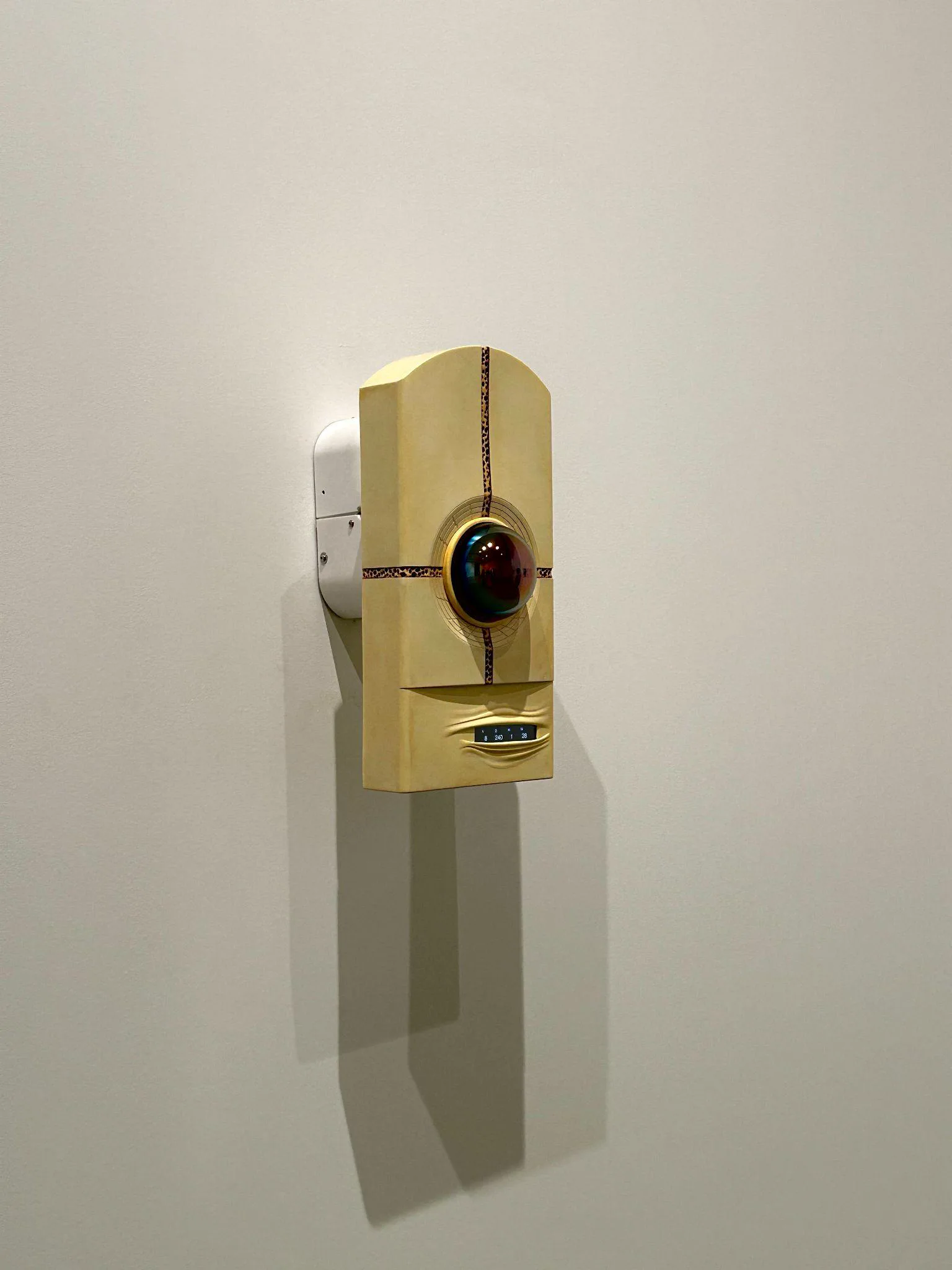
Another defining feature of the Biennial is its commitment to sensory and interactive experiences. Unlike traditional museum exhibitions that prioritize visual observation, the 2026 Biennial incorporates sound, touch, smell, moving images, and digital interaction. Some installations invite visitors to physically engage with the work, while others transform galleries into immersive environments that appeal to multiple senses simultaneously.
One particularly compelling example is Cooper Jacoby's interactive installation. Resembling a series of door intercom systems, the work combines cameras, speakers, and artificial intelligence technology to create the impression of an object that watches and responds to its viewers. When visitors look at the installation, they become aware of being observed in return. The work blurs the boundary between human and machine while raising questions about surveillance, attention, and contemporary social behavior. In a world increasingly shaped by digital technologies and AI, Jacoby's installation captures the unsettling feeling that we are constantly watching others while also being watched ourselves.
The inclusion of interactive installations, video games, sound pieces, and other multisensory works demonstrates the Biennial's willingness to challenge conventional expectations of what an art exhibition can be. Rather than positioning visitors as passive spectators, it encourages them to become active participants in the production of meaning.
Despite its many strengths, the exhibition is not without limitations. One potential criticism is its lack of a clearly defined central theme. The Biennial includes an extraordinary range of artistic practices, media, and perspectives, which can occasionally make the exhibition feel fragmented. The emphasis on atmosphere, sensory engagement, and experimentation may leave some visitors searching for a stronger curatorial narrative. However, this apparent lack of coherence may also be one of the exhibition's greatest innovations. Contemporary life is increasingly shaped by overlapping cultural, technological, ecological, and political realities. Rather than imposing a single interpretation, the Biennial embraces complexity and allows diverse voices and experiences to coexist. Its fragmented structure reflects the multifaceted nature of the contemporary world itself.
Ultimately, Whitney Biennial 2026 functions both as a survey of contemporary American art and as a guide to its future direction. By foregrounding cultural diversity, Indigenous perspectives, ecological thinking, and new forms of sensory engagement, the exhibition moves beyond traditional questions of representation toward a broader exploration of connection and coexistence. Rather than asking who deserves visibility, Whitney Biennial 2026 asks how different people, histories, cultures, technologies, and environments might live together. In doing so, it not only reflects current developments in American art but also points toward the future of contemporary art on a global scale.