Wildfire Smoke Drifts South Again, Triggering Air Quality Alert Across the Region
Hazy skies and an acrid smell returned to the city as smoke from distant fires pushed fine-particle levels into the unhealthy range for a second summer running.
By Marcus Bell · July 13, 2026 · 4 min read
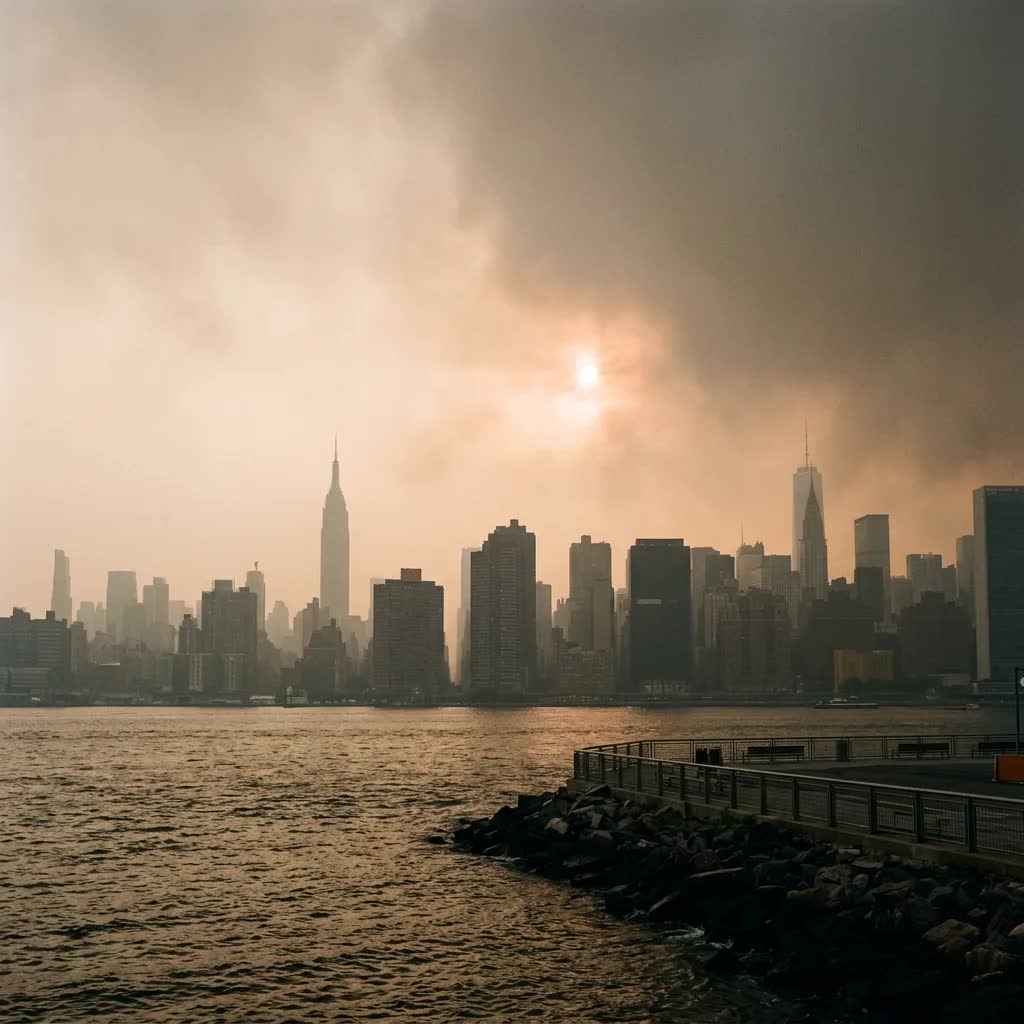
NEW YORK — A pall of pale-orange haze settled over the skyline again on Sunday as smoke from wildfires hundreds of miles away drifted into the region, pushing fine-particle pollution into the unhealthy range and prompting a regionwide air quality alert. The familiar acrid smell hung over sidewalks and subway grates by late morning, and by afternoon the tops of the tallest towers had faded into a smudged gray-brown, a scene that has become an unwelcome midsummer ritual.
The Air Quality Index climbed above 150 in parts of the city, a level at which health officials advise everyone to limit prolonged outdoor exertion and urge people with asthma, heart disease, or lung conditions to stay indoors. The particles of concern, known as PM2.5, are small enough to slip deep into the lungs and cross into the bloodstream, and researchers have linked short-term spikes to jumps in emergency room visits for breathing trouble within a day or two.
Hospitals across the boroughs reported an early uptick in respiratory complaints, and several pharmacies said they had sold through their stock of high-filtration masks by midday. A pulmonologist at a Manhattan hospital said the pattern is now depressingly predictable. "We see the map turn colors, and 24 hours later the waiting room fills up with wheezing," she said. "The people who suffer most are the ones who can least afford to shut their windows and run an air purifier all day."
The city distributed portable air cleaners to senior centers, schools running summer programs, and shelters, and reminded residents that recirculating a car's air-conditioning and keeping windows shut can meaningfully cut indoor exposure. Officials also flagged the free real-time air monitoring map the Health Department maintains, which now draws on a denser grid of neighborhood sensors installed after the smoke events of recent summers.
Climate scientists caution that these episodes are no longer freak occurrences but a recurring feature of a warming continent, as longer fire seasons and shifting jet-stream patterns funnel smoke across vast distances. "We used to treat this as a once-in-a-generation event," one atmospheric researcher said. "Now we plan for it the way we plan for a heat wave — as something that will happen, and probably more than once a year." Forecasters expect the haze to linger into Tuesday before a shift in the winds clears the air.