Women’s College Volleyball Is Ready for a Bigger Stage. The Fans Are Already There.
Record crowds and expanded national broadcasts are giving women’s college volleyball the kind of marquee stage long enjoyed by major college sports.
By Iris Ye · August 17, 2026 · 4 min read
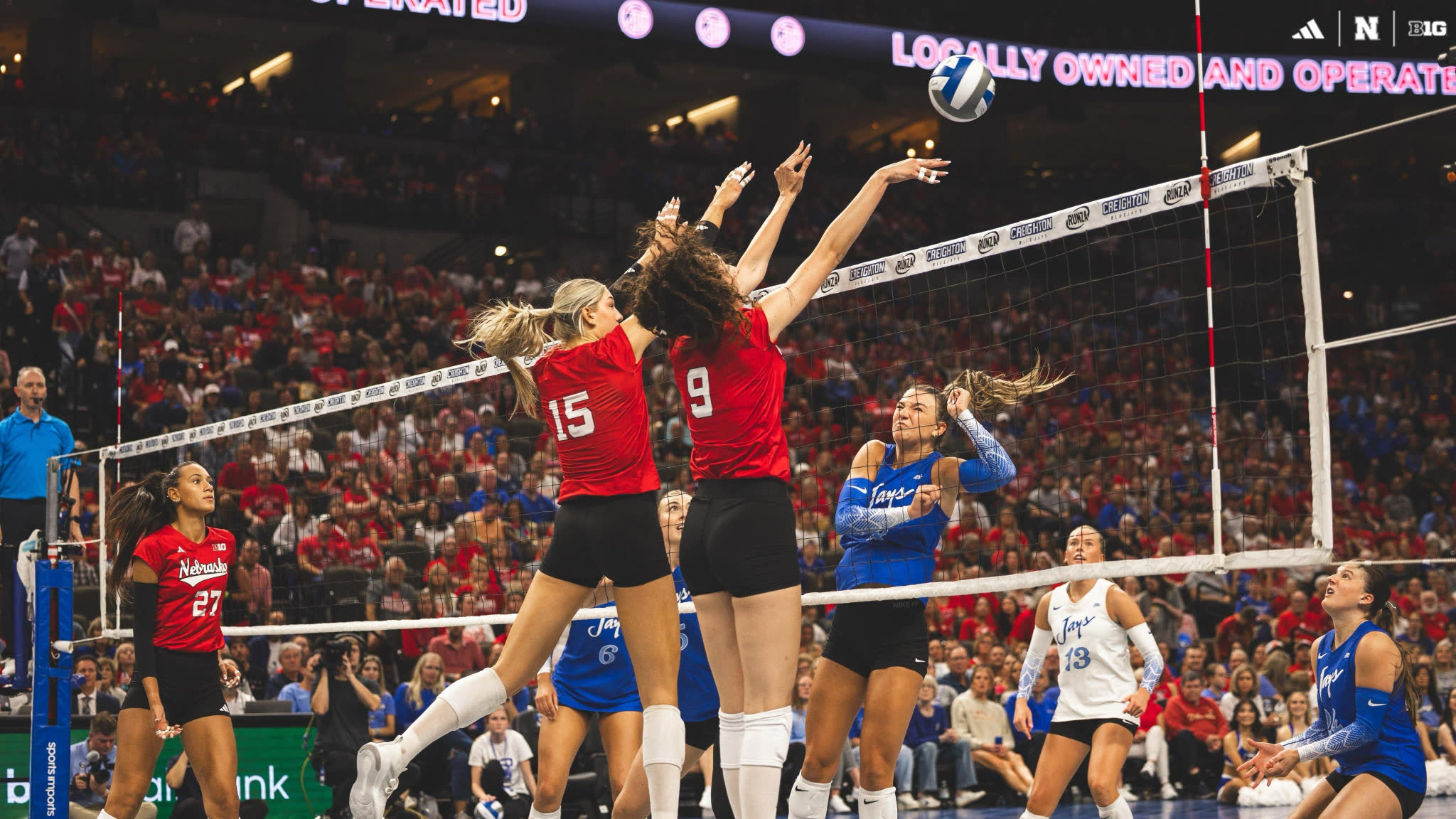
NEW YORK, Aug. 17, 2026 — Women’s college volleyball has spent the past several years filling arenas, breaking attendance records and turning traditionally regional followings into major sporting events. This season, the national stage is beginning to catch up.
FOX Sports announced Monday that it will carry 35 women’s college volleyball matches in 2026, including eight on the FOX broadcast network — the most ever shown by a broadcast network in a single season. The remaining 27 will air on FS1 and FS2.
The schedule is built around more than volume. It includes top-ranked Nebraska against No. 2 Texas at the inaugural Players Era Volleyball Showcase in Las Vegas on Aug. 30, a Big Ten/SEC Volleyball Challenge doubleheader at Wrigley Field on Sept. 6 and the championship of the first Big Ten Volleyball Tournament in November. The result is a season increasingly organized around the kinds of marquee matchups, destinations and championship moments familiar in major college sports.
The audience for those moments did not appear overnight. NCAA records show that 92,003 fans filled Nebraska’s Memorial Stadium for Nebraska-Omaha in 2023, setting what was then the world attendance record for a women’s sporting event. The 2024 NCAA championship between Penn State and Louisville drew 21,860, an indoor record for women’s college volleyball. A year later, Nebraska-Creighton attracted 17,675 fans, the largest regular-season indoor crowd in the sport’s history.
Those crowds make more sense when watching the sport itself.
Part of volleyball’s appeal is built into its rhythm. A serve can become a diving dig within seconds; a rally can shift from scrambling defense to a decisive attack at the net. Momentum can turn repeatedly within a set, while the compact court keeps players, coaches and spectators visually close to the action. In college arenas, student sections, coordinated chants and the speed between points make the crowd part of that rhythm rather than a distant backdrop.
Women’s volleyball also holds an unusual position in the college sports landscape. At programs such as Nebraska and Wisconsin, the women’s team itself has become a major sporting attraction. Nebraska’s record crowds and Wisconsin’s history of drawing more than 16,000 fans for regular-season matches show that the sport does not always need another event — or a men’s counterpart — to bring people through the doors. Its strongest programs have built traditions capable of bringing fans back year after year.
The next challenge is whether those deeply rooted local cultures can grow into a more consistent national one.
Television audiences suggest there is room to do so. NCAA figures show that regular-season women’s volleyball on ESPN platforms averaged 116,000 viewers in 2023, up 58% from the previous year. That season’s NCAA championship, the first carried by ABC, averaged 1.7 million viewers even while competing against NFL games.
National television cannot manufacture the traditions already surrounding college volleyball. What it can do is make them visible beyond the communities where they were built. A viewer far from Lincoln or Madison may never experience those arenas in person, but a nationally televised Nebraska-Texas match can turn a regional powerhouse, rivalry or athlete into part of a shared sports conversation.
That path may differ from the recent rise of women’s college basketball. FOX Sports executive Mike Mulvihill told the Associated Press on Monday that he sees volleyball showing patterns similar to women’s basketball several years ago. Yet volleyball currently lacks a single national figure comparable to the superstar athletes who accelerated basketball’s breakthrough.
Its growth has instead been strongly program-driven. Nebraska, Wisconsin, Texas, Penn State, Louisville and Pittsburgh have developed recognizable identities through sustained success, rivalries and fan loyalty. That offers another model for how a women’s sport can expand: its growth has instead been strongly program-driven, with teams and traditions giving viewers reasons to return season after season.
The sport itself is also creating more of those reasons. The Big Ten says its first conference tournament will bring 15 teams to Fishers, Indiana, from Nov. 20 through 25, adding a concentrated stretch of elimination matches and a new championship to the season.
Perhaps the clearest sign of women’s volleyball’s growth will come when the conversation is no longer primarily about its growth. It will come when more fans are simply debating who is No. 1, which rivalry matters, who can win the conference and which match they cannot miss.
The audience has already shown that it will fill stadiums. The next test is whether women’s college volleyball can make the rest of the country feel part of the crowd.