World Cup Murals Light Up the City: Artists Bring the Beautiful Game to Brooklyn and Queens Walls
From a 60-foot Messi portrait in Sunset Park to a mosaic of national flags spanning a Flushing underpass, a wave of public art commissioned for the tournament has turned neighborhoods into galleries.
By Ivy Liu · June 29, 2026 · 4 min read
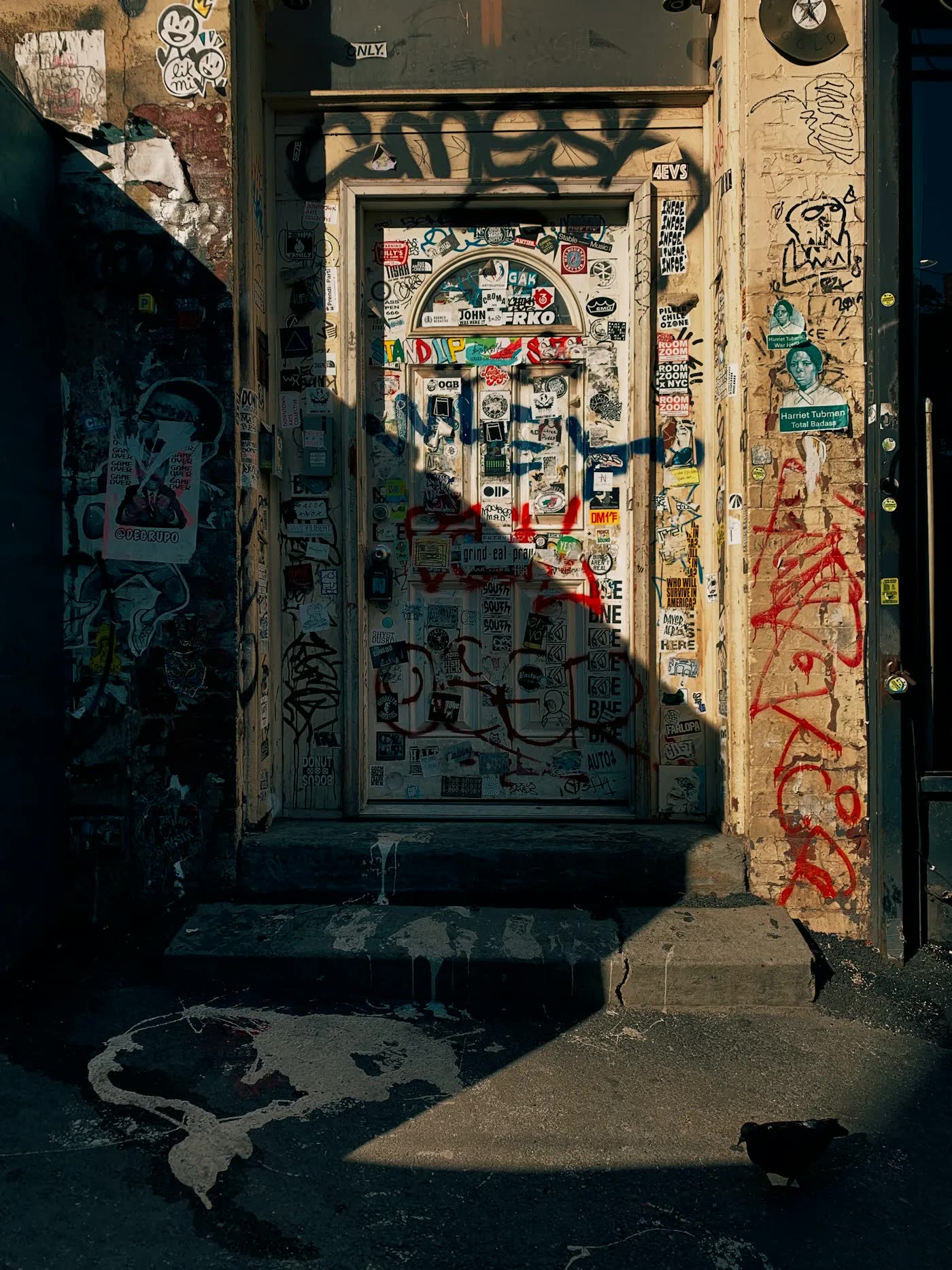
NEW YORK -- In the weeks leading up to and during the FIFA World Cup, the walls of Brooklyn and Queens have been transformed by a wave of commissioned and guerrilla public art that treats the tournament not merely as a sporting event but as an occasion for the city to look at itself -- its neighborhoods, its immigrant communities, its love of a game that arrived here from everywhere else. More than 60 murals have been documented by the public art nonprofit Groundswell since May, ranging from formally commissioned works underwritten by the World Cup organizing committee to pieces that appeared overnight without authorization and were quietly absorbed into the visual landscape of their blocks.
The most discussed work is a 60-foot portrait of Lionel Messi on the exterior of a warehouse on 8th Avenue in Sunset Park, Brooklyn, commissioned by a Bangladeshi-American business association and painted by the Argentine muralist Gonzalo Velez over the course of four days in late May. The image -- Messi in mid-stride, his face turned slightly upward, rendered in the blue and white of the Argentine national team -- has become a selfie destination for visitors and a source of complex neighborhood pride. Sunset Park's population is roughly 45 percent Central American and 30 percent Chinese American, and Velez's Messi stands as a kind of meeting point, a figure beloved by enough of the block's different communities to anchor a shared image.
In Flushing, Queens, a 120-foot mosaic spanning the underpass beneath the Long Island Rail Road tracks at Main Street assembles the national flags of all 48 World Cup participants into a single continuous field, with New York City's skyline visible through the gaps between flags. The work was commissioned by the Queens Museum and executed by a team of 22 artists over six weeks. The museum's director, Sally Tallant, described it as a response to a fundamental fact about Queens: that it is the most linguistically diverse urban county on earth, and that the World Cup offered an opportunity to make that diversity visible in a monumental form.
Not all of the public art has been sanctioned. In Astoria, a series of smaller portraits of players from Greece, Egypt, and Mexico -- countries with large local populations -- appeared on commercial building facades in June without property owner permission. Most owners have allowed the works to remain, and several have added small plaques identifying the subjects. The unauthorized murals have sparked a recurring conversation among artists, community board members, and property owners about the difference between vandalism and gift, and about who has the right to determine what a city wall is for.